✓
Describe it once
Explain where you see growth or smell odor, what got wet, and when it started. We use that to connect you with a contractor who takes on this type of mold job.
Serving Columbus, Ohio & surrounding areas
Calls answered around the clock
Mold removal service · Columbus, Ohio
Describe what you're seeing once and we'll connect you with a local contractor who handles inspection, containment, and cleanup for indoor mold problems.
Inspection, containment and cleanup
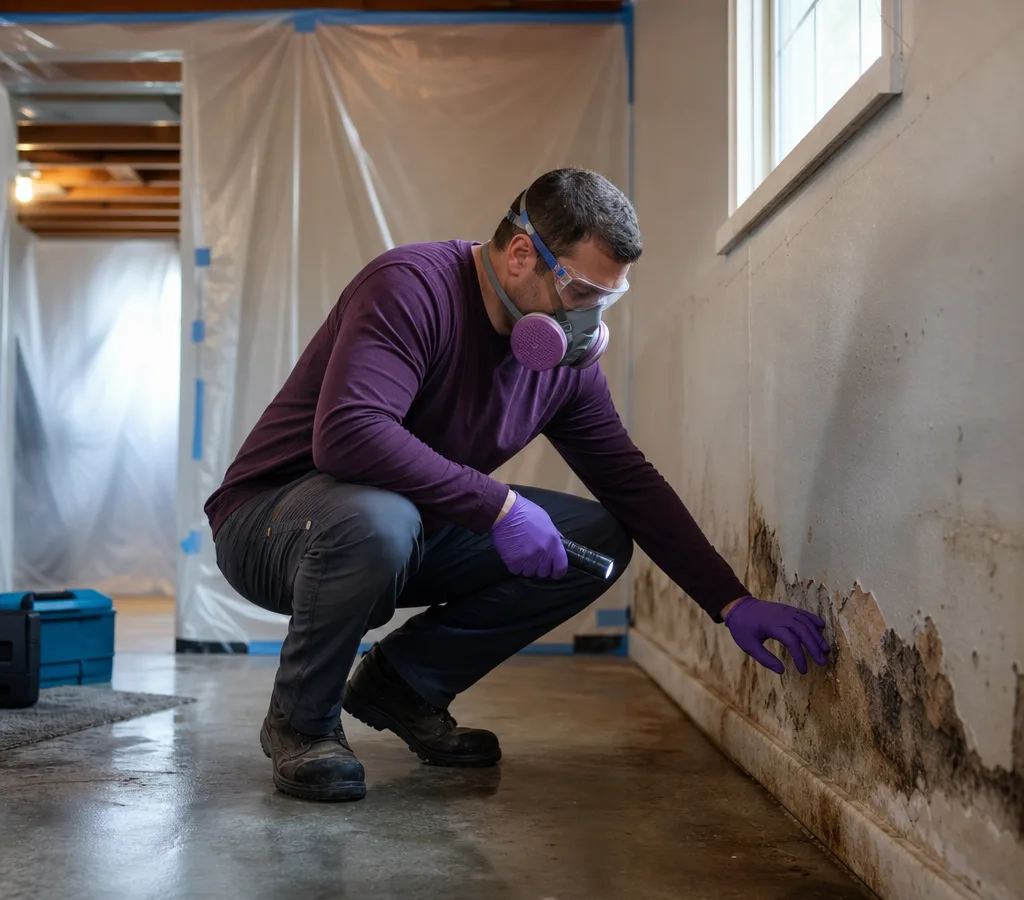
If you're searching for black mold removal Columbus Ohio, you're usually dealing with one of three things: visible growth on drywall or wood, a persistent musty odor, or a damp area that keeps coming back after cleaning.
Not sure this is the right service? The Columbus mold removal overview explains how inspection, containment and cleanup fit together, and the same number reaches us either way.
Mold cleanup is more than wiping a surface. A contractor typically treats it as a moisture problem first, then a cleanup problem:
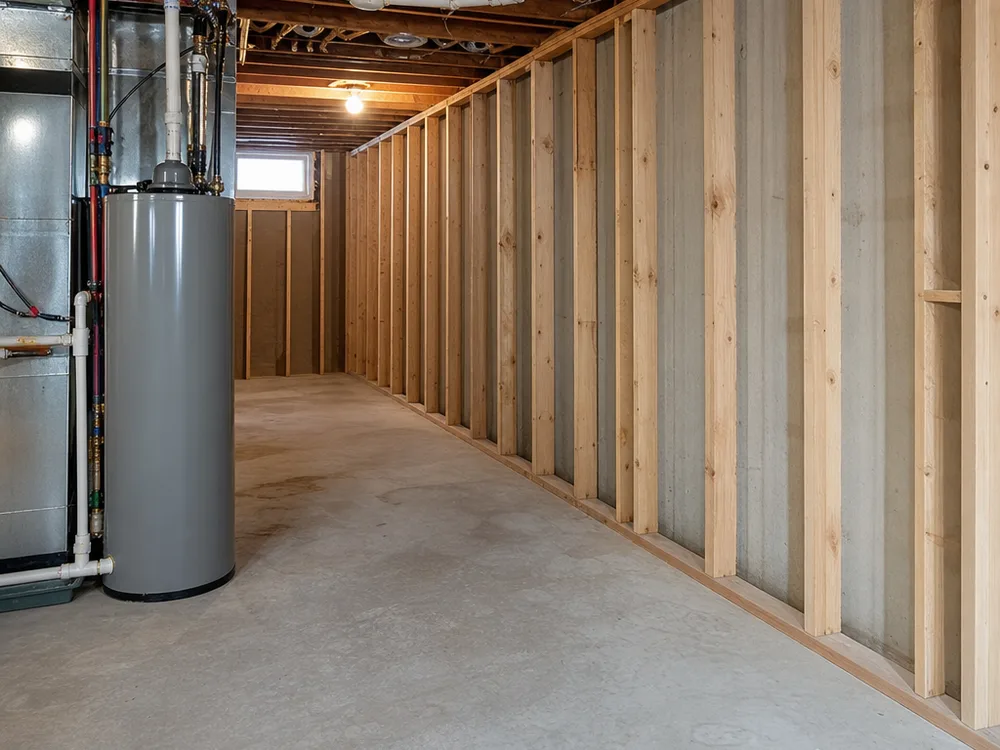
In Columbus homes, basements and crawlspaces are common trouble spots because they're closer to groundwater and can run humid in warm months. Older homes can also have mixed materials and hidden cavities that let moisture travel, so a good plan focuses on where the water is coming from, not only what is visible.
One-call local referral
Explain where you see growth or smell odor, what got wet, and when it started. We use that to connect you with a contractor who takes on this type of mold job.
Instead of calling down a list and waiting on multiple callbacks, you get connected with a contractor who serves Columbus and nearby communities.
The contractor can walk you through what needs containment, what may need removal, and what should be fixed so moisture doesn't keep feeding the problem.
You talk to the contractor directly, ask questions, and decide whether the scope and timing make sense for your situation.
If you have a damp basement, a recent leak, or a strong odor, getting connected helps you address the conditions that allow mold to spread.
From one call to a practical plan
Share the area involved, what you're noticing, and whether there was a recent leak or flooding.
We match your situation to an independent contractor who handles mold inspection and remediation work in the Columbus area.
The contractor asks about materials, occupants with sensitivities, and whether the area is finished or unfinished so containment and removal can be planned.
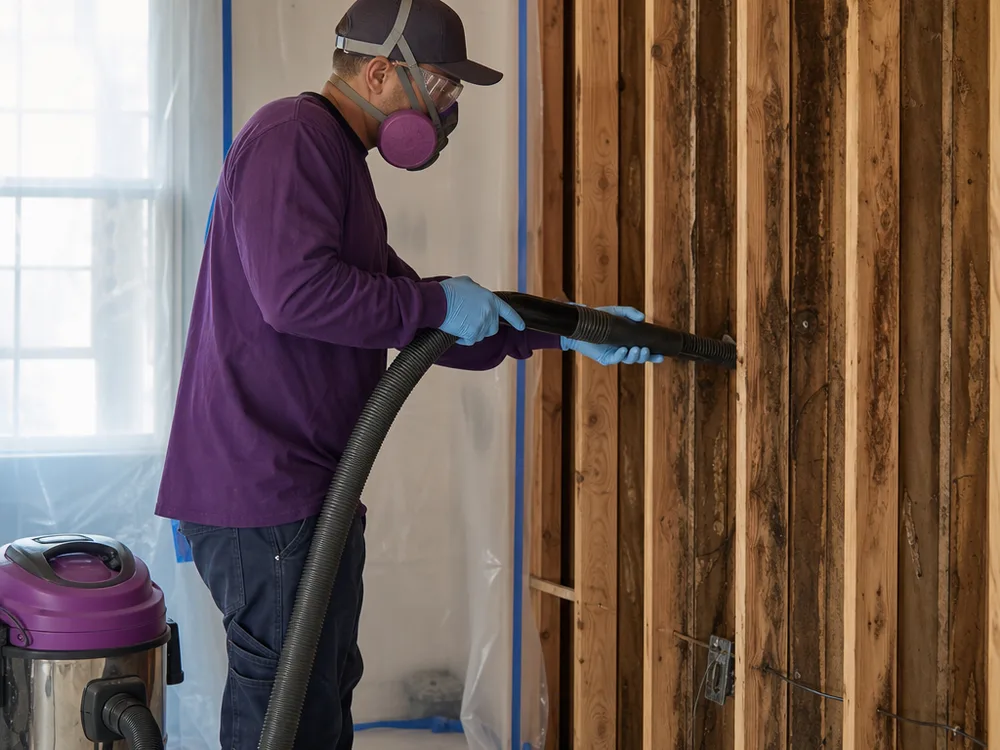
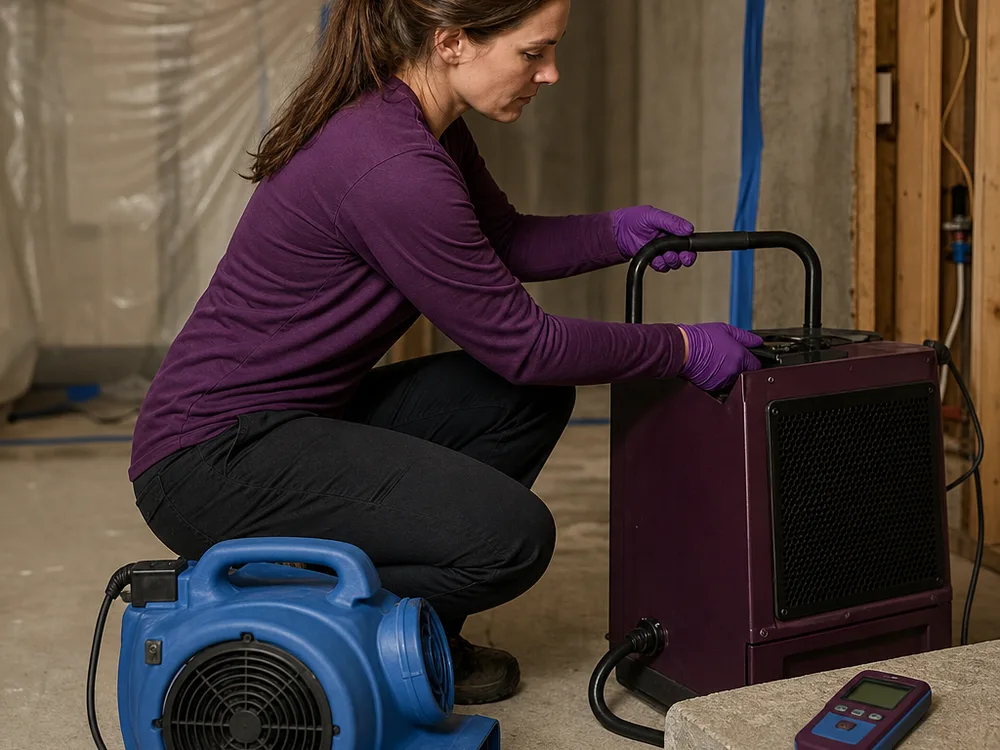
The contractor handles setup, containment, removal or cleaning, HEPA cleanup, and post-work guidance for keeping the area dry.
If you suspect mold, describe the moisture history and where you're seeing it once, and we'll connect you with a local contractor who can take it from there.
Removal, HEPA cleanup and drying
Common questions
Understand containment, affected materials, moisture correction, and what to discuss with the local contractor before deciding what happens next.
Have the location, what you're seeing or smelling, and the moisture story ready—such as a leak, seepage, condensation, or humidity. It also helps to know whether the area is finished, whether materials were soaked, and whether you've already run fans or a dehumidifier.
It depends on where the mold is, how contained the work area can be, and whether anyone in the home is sensitive to airborne irritants. A contractor will discuss containment, keeping people and pets away from the work zone, and whether certain rooms should be avoided during removal and HEPA cleanup.
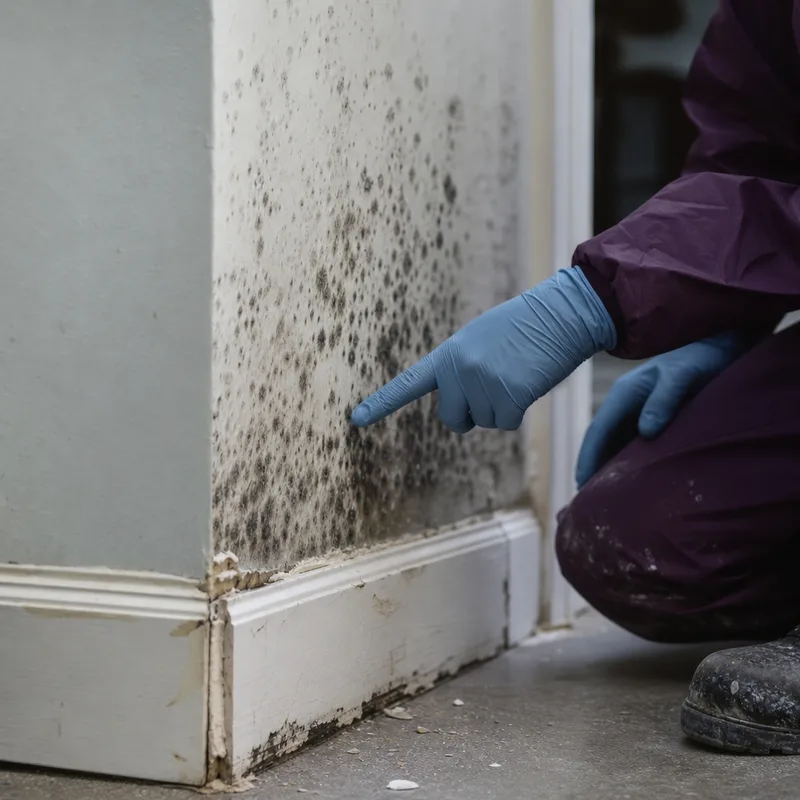
Surface wiping can remove visible staining, but it does not solve moisture in materials or hidden growth in porous surfaces. Contractors often recommend removing contaminated porous materials and correcting moisture because mold returns when damp conditions remain.
The decision is usually based on material type and how deeply contamination can travel. Drywall paper, insulation, and carpet pad often cannot be reliably cleaned once colonized, while some framing lumber, masonry, and hard surfaces can be cleaned using appropriate methods after the area is dried and contained.
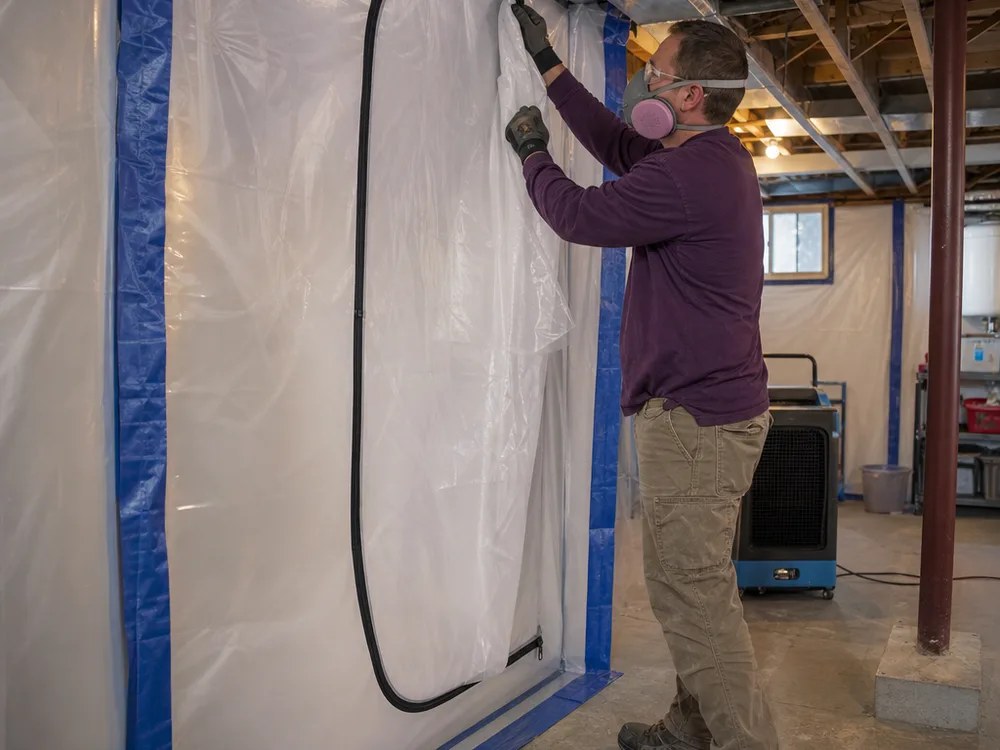
Containment commonly involves plastic sheeting to isolate the area, a sealed entry, and equipment to manage airflow so particles do not drift into nearby rooms. Ask the contractor how return-air pathways, adjacent rooms, and high-traffic routes will be protected.
Basement mold usually follows moisture from foundation seepage, dampness after heavy rain, plumbing leaks, or humid air condensing on cooler surfaces. The contractor can help narrow it down by asking where water appears and which materials stay damp.
Stopping the moisture source is part of a durable plan, and timing depends on the situation. Sometimes the source can be corrected first; other times containment and removal begin while repair work is coordinated. The contractor can explain the order for your conditions.
A persistent musty smell often points to damp building materials, but it can also come from wet insulation, a hidden plumbing drip, or stored items that stayed damp. A contractor can trace moisture and inspect common hiding spots behind finished walls, beneath carpet edges, around exhaust routes, and near HVAC components.
One call starts the conversation
Call Mold Removal Columbus OH and describe the area, the odor or visible growth, and any recent water issues. We'll connect you with a local contractor who handles mold inspection and remediation, and you can decide what to do next after you speak with them.