✓
Describe the problem once
Instead of repeating the story to several companies, you share the details one time and get connected with a contractor who takes on water damage jobs.
Serving Columbus, Ohio & surrounding areas
Calls answered around the clock
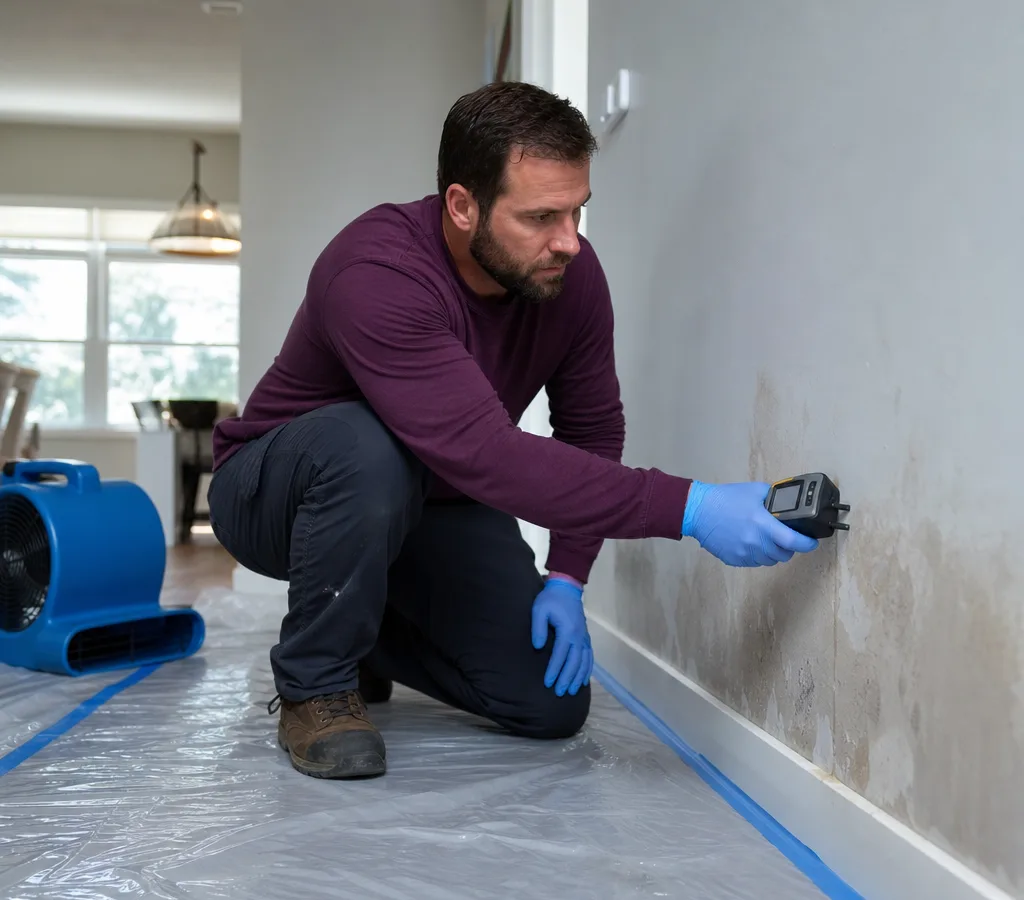
Water damage repair · Columbus, Ohio
Describe what happened once and we'll connect you with a local contractor who handles drying, cleanup, and repair for water-damaged spaces.
Moisture mapping, drying and repair
If you're searching for water damage repair Columbus OH, you're usually dealing with one of three situations: a sudden leak such as a supply line, water heater, or dishwasher problem; a backup or overflow; or slow moisture that has been building for weeks.
Not sure this is the right service? The Columbus mold removal overview explains how inspection, containment and cleanup fit together, and the same number reaches us either way.
A proper water damage repair job is typically a sequence of decisions, not a single task. The contractor's first goal is to stop the water source and identify where moisture traveled. Water moves through baseboards, under flooring, into wall cavities, and down to lower levels. What looks like a small wet spot can hide saturated insulation, subfloor swelling, or moisture trapped behind cabinetry.
In Columbus, wet basements and lower-level family rooms are common calls after heavy rain, sump issues, or seepage through foundation walls. That changes the plan because drying a below-grade space often means managing both standing water and humidity so moisture does not reappear after the equipment comes out.
Most contractors approach the work in phases:
We're not the contractor doing the work. Mold Removal Columbus OH is a referral service. When you call, you describe the affected area, the water source if known, and what you've done so far, and we connect you with a local contractor who handles Columbus water damage repair.
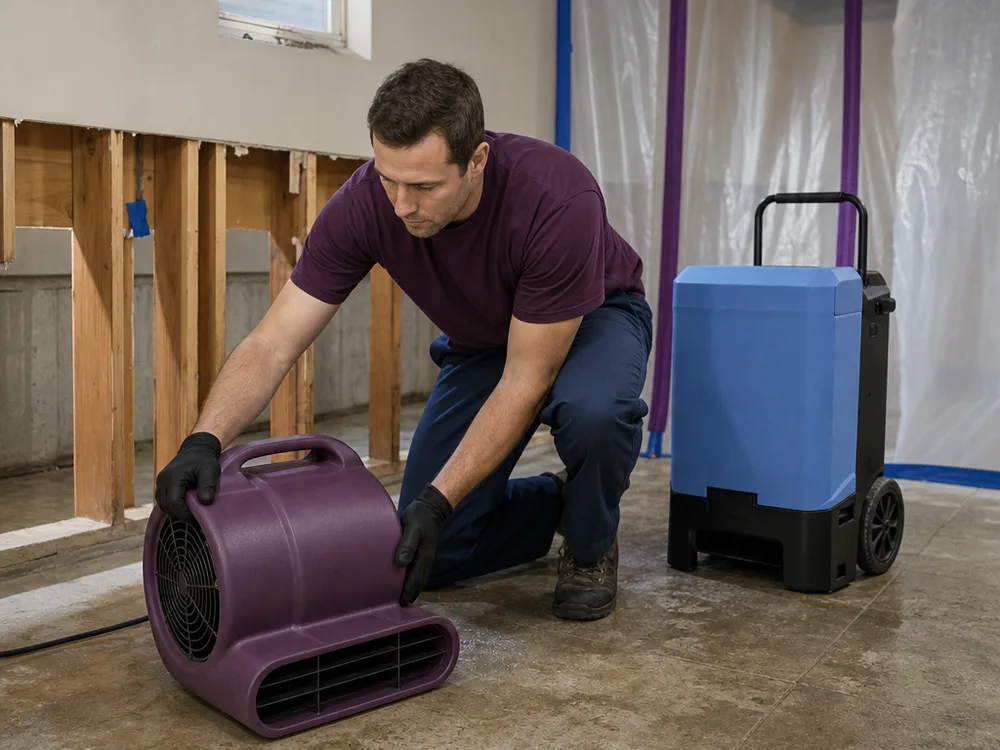
One-call local referral
Instead of repeating the story to several companies, you share the details one time and get connected with a contractor who takes on water damage jobs.
You're connected with an independent contractor who works in the Columbus area and understands common housing layouts and basement conditions.
Water damage can mean drying only, selective removal, or full rebuild. The contractor can explain what needs to happen in your situation and why.
You talk directly with the contractor, ask your questions, and decide whether to move forward after you understand the plan.
If you're documenting the loss for your own records or an insurance conversation, the contractor can tell you what photos and notes are useful.
From the first call through repairs
Share the water source if you know it, what areas are wet, and whether water reached a basement or crawl space.
You're connected with an independent contractor who handles water damage repair in Columbus and can talk through next steps.
The contractor looks for migration paths under floors, behind baseboards, and inside wall cavities, then uses moisture readings to set a drying plan.
Equipment is set, wet materials are removed when needed, and the area is cleaned. Drying is monitored so repairs do not start over trapped moisture.
Once the structure is dry, repairs can include drywall, insulation, trim, paint, and flooring work to restore the space for normal use.
If you're dealing with wet drywall, buckled flooring, or a damp basement smell, describe what you're seeing and get connected with a local contractor who handles water damage repair in Columbus.
Moisture checks, selective removal and restoration
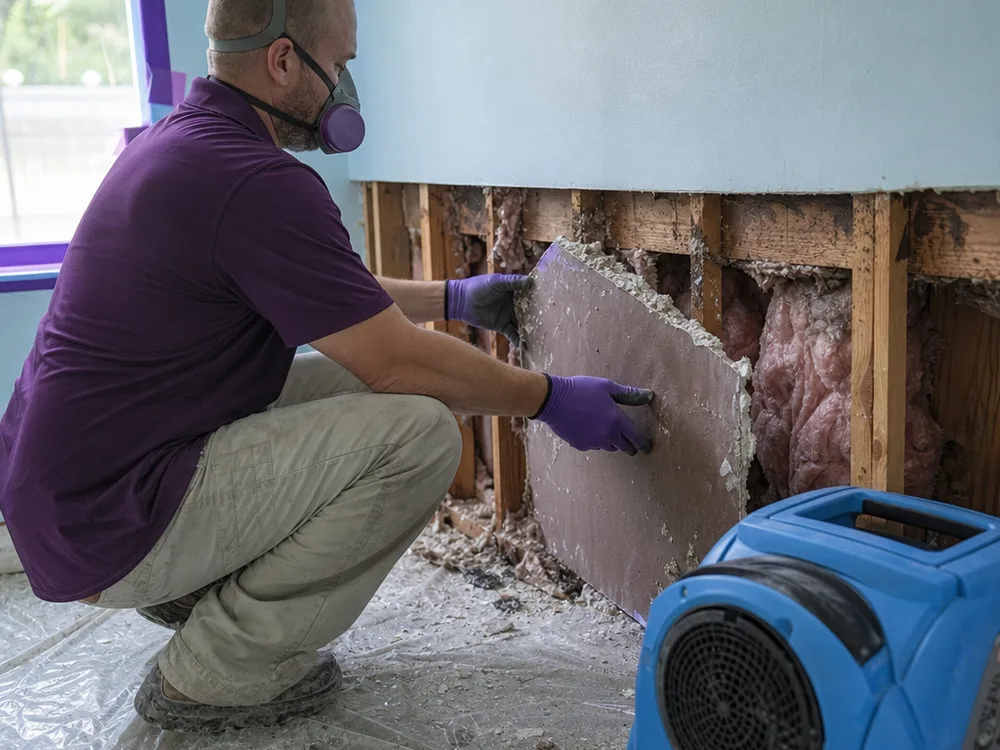
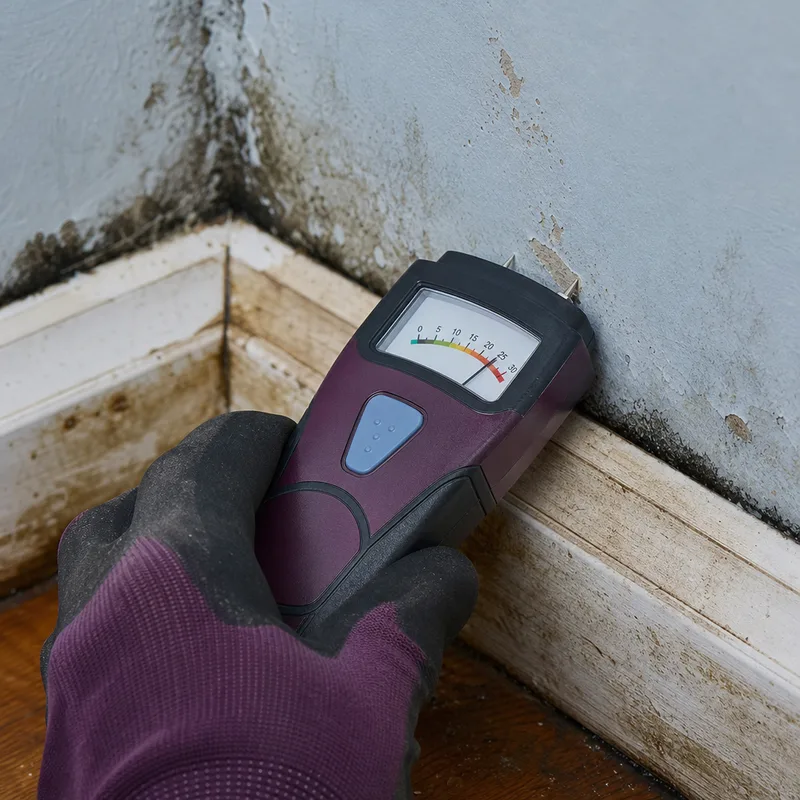
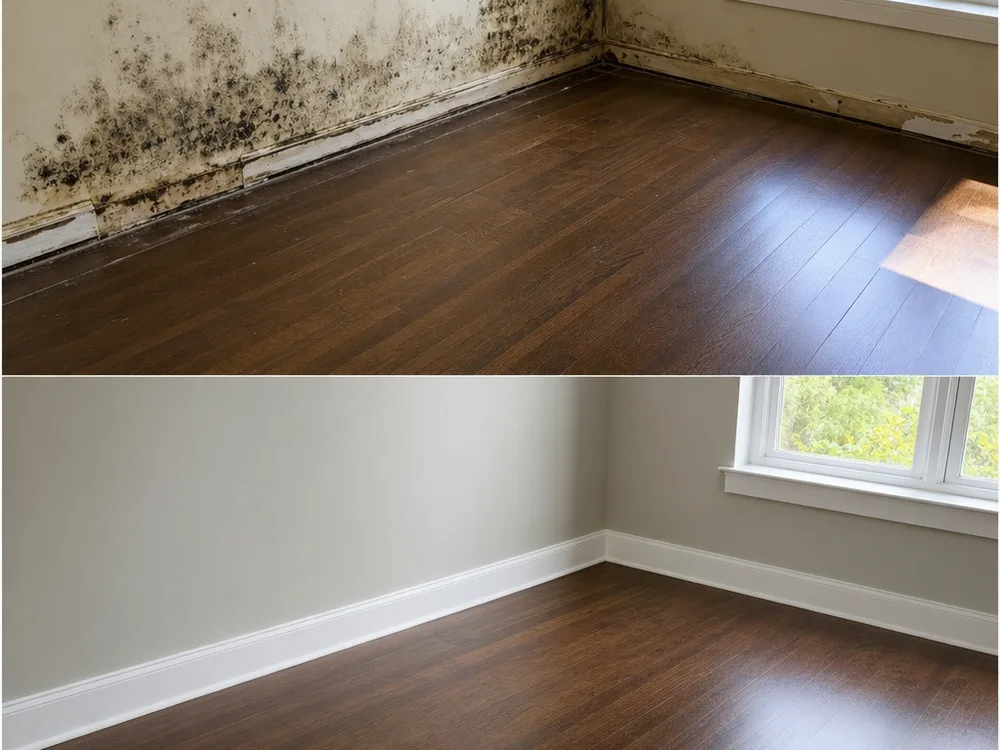
One call simplifies the next step
The contractor can discuss moisture readings, drying needs, material removal, and repair work with you. You ask questions and decide what happens next.
Common questions
Water damage is often inside the assembly when you see swelling, soft drywall, loose baseboards, bubbling paint, or flooring that cups or crowns. A contractor typically confirms it with moisture meter readings at multiple points and sometimes by opening a small section at the lowest area where water would collect.
Have the water source if known, when you first noticed it, which rooms are affected, whether water reached a lower level, and what materials are involved. If you can safely do so, note whether the water is clean supply water or came from an overflow or backup because that changes cleanup steps.
No. Some assemblies can dry in place when moisture levels, material type, and water source allow it. Contractors often remove only what cannot be dried reliably, such as swollen engineered wood, saturated carpet pad, crumbling drywall, or insulation holding water inside a wall cavity.
Drying time depends on how far water traveled, the material thickness, and airflow in the affected area. Many jobs require multiple days of drying and monitoring, and repairs usually start after the contractor confirms moisture levels are back to a suitable range for rebuilding.
Basements are often below grade, so moisture can linger and humidity can stay high after visible water is gone. Contractors usually pay extra attention to concrete walls and floors, contents stored near the slab, and hidden wet areas behind finished basement walls where air movement is limited.
Many contractors can point out what to photograph and note, such as the source area, water lines on walls, affected materials, and removed sections. You still make your own decisions about who to involve and what to approve, but good documentation helps keep the timeline and scope clear.
Start by getting the area assessed for remaining moisture because ongoing dampness allows mold to develop. If the contractor sees signs that mold may already be present, they may recommend a separate evaluation or specialized cleanup; some homeowners also use a referral call for mold removal as a next step.
One call starts the conversation
Describe the leak, flood, or damp area once and we'll connect you with a local Columbus contractor who can evaluate the drying and repair work needed.