✓
Describe it once
Explain where the water is coming from, what areas are affected, and what you've already shut off or moved. We use that to connect you with a contractor who handles this kind of job.
Serving Columbus, Ohio & surrounding areas
Calls answered around the clock
Water damage service · Columbus, Ohio
Describe what happened once and get connected with a local contractor who handles water cleanup and restoration in the Columbus area.
Extraction, drying and material recovery
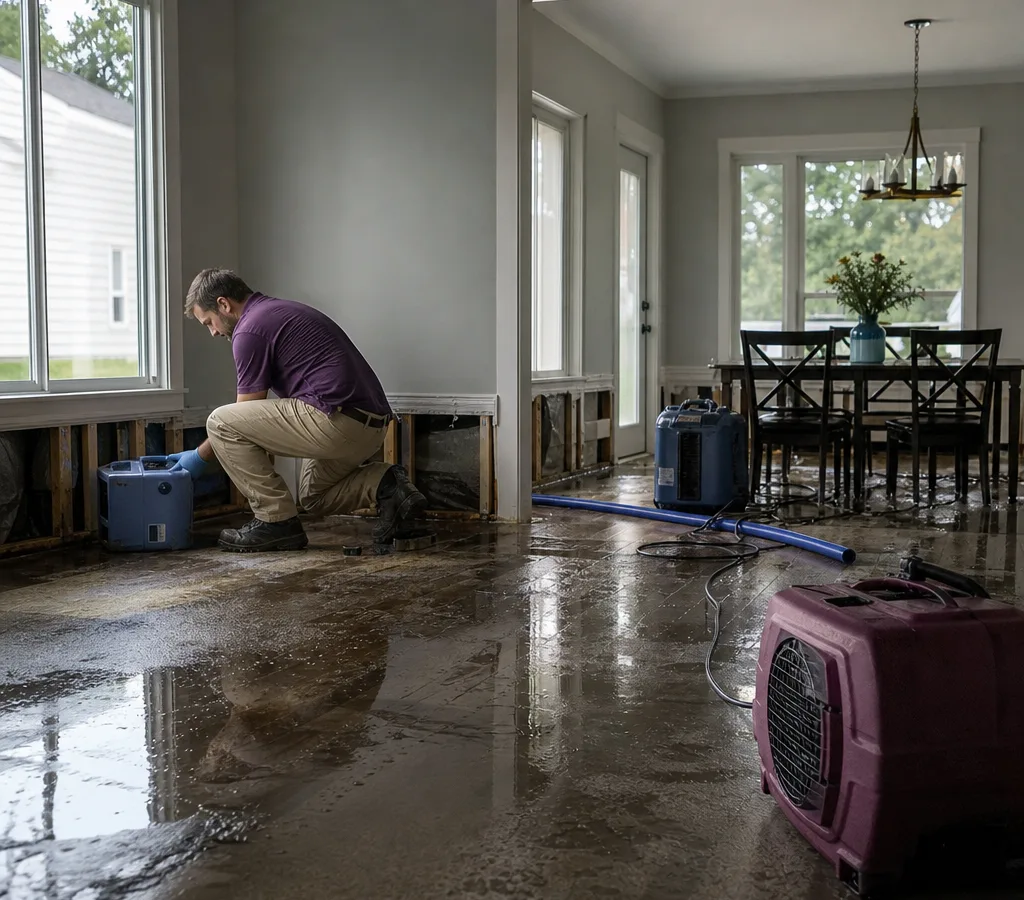
Water damage rarely stops at the puddle you can see. Water moves through seams in flooring, under baseboards, and into drywall and insulation. In Columbus, Ohio, common causes include burst supply lines during cold snaps, sump pump issues after heavy rain, overflowing fixtures, and water intrusion around windows or roof penetrations.
Not sure this is the right service? The Columbus mold removal overview explains how inspection, containment and cleanup fit together, and the same number reaches us either way.
When you call Mold Removal Columbus OH, we take the details and connect you with a local contractor who focuses on water damage restoration. You stay in control: you speak directly with the contractor, they explain what they see, and you decide whether to move forward.
Most water damage jobs are some version of these steps:
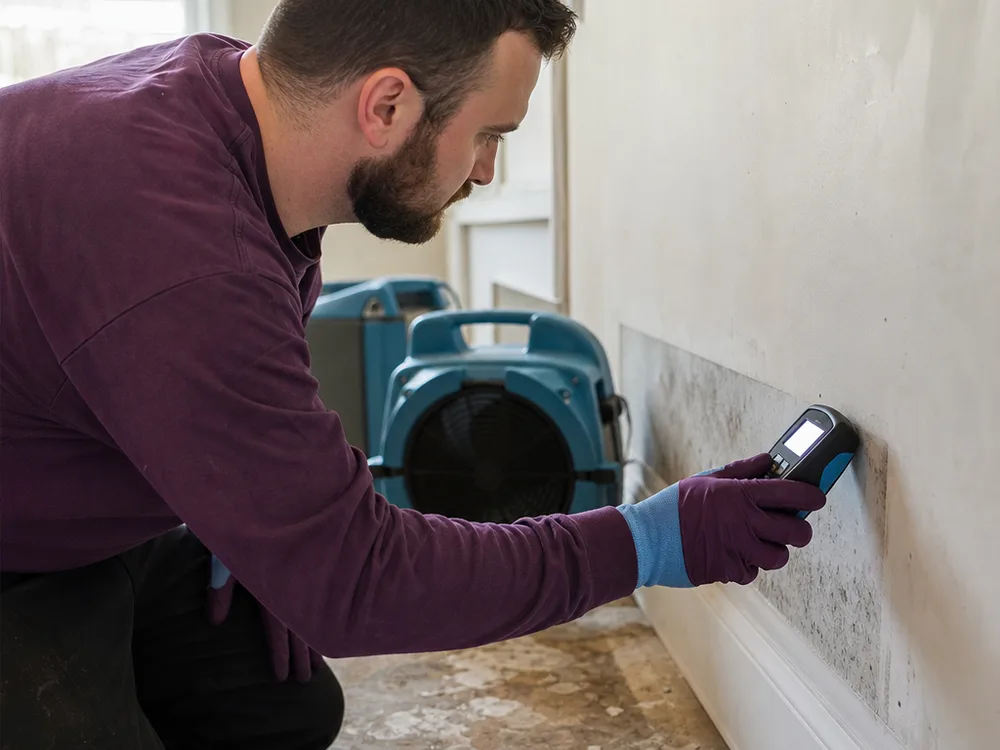
A key point in water damage Columbus OH calls: drying decisions depend on what got wet and how wet it is, not how the surface looks. Drywall can be damp behind paint, and subfloor can stay wet under vinyl or tile long after the top feels dry.
One-call local referral
Explain where the water is coming from, what areas are affected, and what you've already shut off or moved. We use that to connect you with a contractor who handles this kind of job.
You're connected with an independent contractor who works in the Columbus area, not someone routed from far outside the region.
You'll discuss scope, access, and next steps directly with the contractor, and you choose whether to proceed.
We'll ask the questions that matter for water damage restoration so the contractor starts with the right picture of the problem.
Many jobs split into drying and cleanup first, then repairs. Knowing which phase you're in helps you plan your next move.
From one call to the next step
Tell us the source if you know it, which rooms are affected, and whether water is still actively entering the home.
We match the details to a contractor who handles water damage cleanup and restoration work in Columbus and nearby communities.
The contractor asks follow-up questions, explains what they'll check on site, and talks through what the work may involve.
If the plan makes sense to you, you can schedule directly with the contractor. If not, you can keep looking. You're not locked into anything by making the call.
If you're dealing with water damage in Columbus, share the source, the rooms affected, and how long materials may have been wet once—and get connected with a local contractor who can take it from there.
Moisture checks, controlled drying and finished repairs

One call simplifies the next step
Share the source if known, affected rooms, materials that got wet, and whether water is still entering. The contractor can use those details to discuss cleanup, drying and repair steps with you.
Common questions
Be ready to share the water source if known, the areas affected, whether water is still flowing, and what materials got wet. If it's a basement issue, mention whether you saw water at the wall and floor joint, around a floor drain, or near a sump pit.
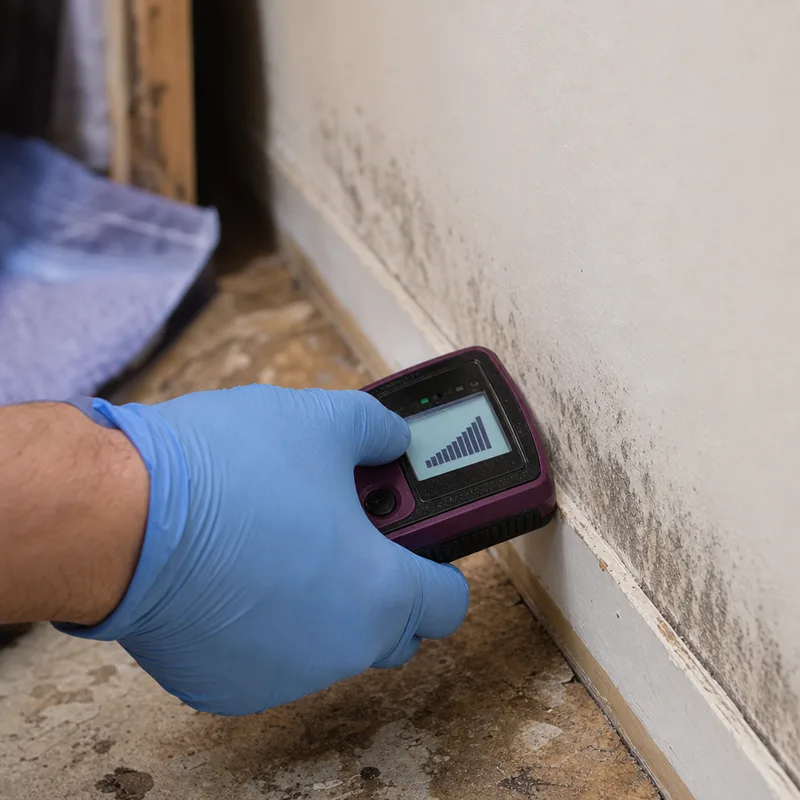
A contractor typically starts by confirming the source is controlled, then maps how far water traveled using moisture readings. They often check baseboards, drywall edges, flooring seams, and adjacent rooms because water can move under walls and floating floors.
No. Removal depends on the type of water involved, how long materials stayed wet, and whether moisture is trapped where it cannot dry properly. A contractor may recommend targeted removal so the remaining structure can dry to normal moisture levels.
Clean water is typically from a supply line or an overflow that has not contacted waste. Contaminated water can involve sewage, groundwater, or water that traveled through dirty building cavities. The category affects what materials can be saved and how cleaning is handled.
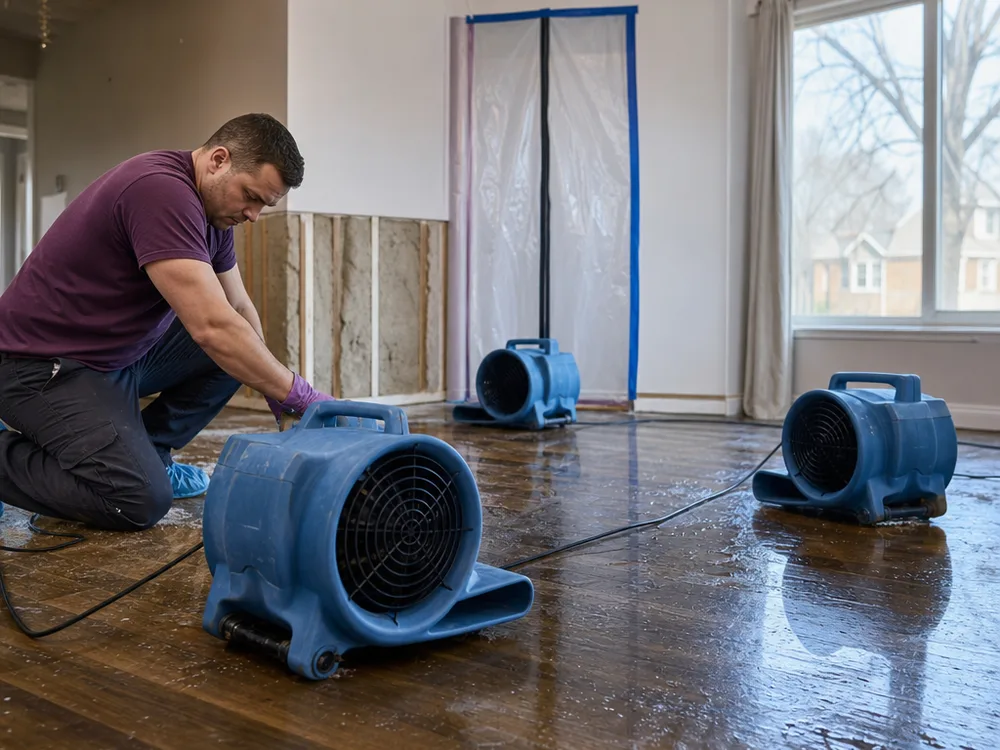
Drying hidden areas often involves controlled airflow and dehumidification, plus access points when needed. Contractors may remove baseboards, drill small access holes when appropriate, or lift sections of flooring so trapped moisture can evaporate rather than staying sealed in.
A musty odor means moisture was present long enough for microbial growth to be possible, but it is not a diagnosis by itself. The contractor can explain whether the plan is focused on drying only, removing affected materials, or adding mold removal if growth is visible or suspected in building materials.
If it is safe, shut off the water source, cut power to affected areas if outlets or appliances are wet, and move valuables and paper goods away from wet materials. Avoid running HVAC into saturated spaces, and avoid opening walls unless you are confident it can be done safely.
One call starts the conversation
Tell us what happened and what areas are affected, and we'll connect you with a local Columbus water damage contractor who can walk you through next steps. You'll speak with the contractor directly and decide how to proceed.